53 dash cams · 9 brands · 46 supercapacitor · 38 with buffered parking · ~$90–$605
The plate is legible
or it is not.
Every dash cam box shouts a resolution. None of them print the number that decides whether you can read the car in front: how many pixels land on each degree of view. We compute it for all 53 cameras here, alongside whether the power cell survives a parked August afternoon and what the parking mode actually records.
Specifications are the manufacturers’. The three derived figures are ours and are marked wherever they appear. How each one is calculated.
Every dash cam we track
Filter by brand, type, channels, power cell, parking tier and price, or tick up to three cameras and put their spec sheets in one table. Sorting defaults to front pixels per degree, highest first.
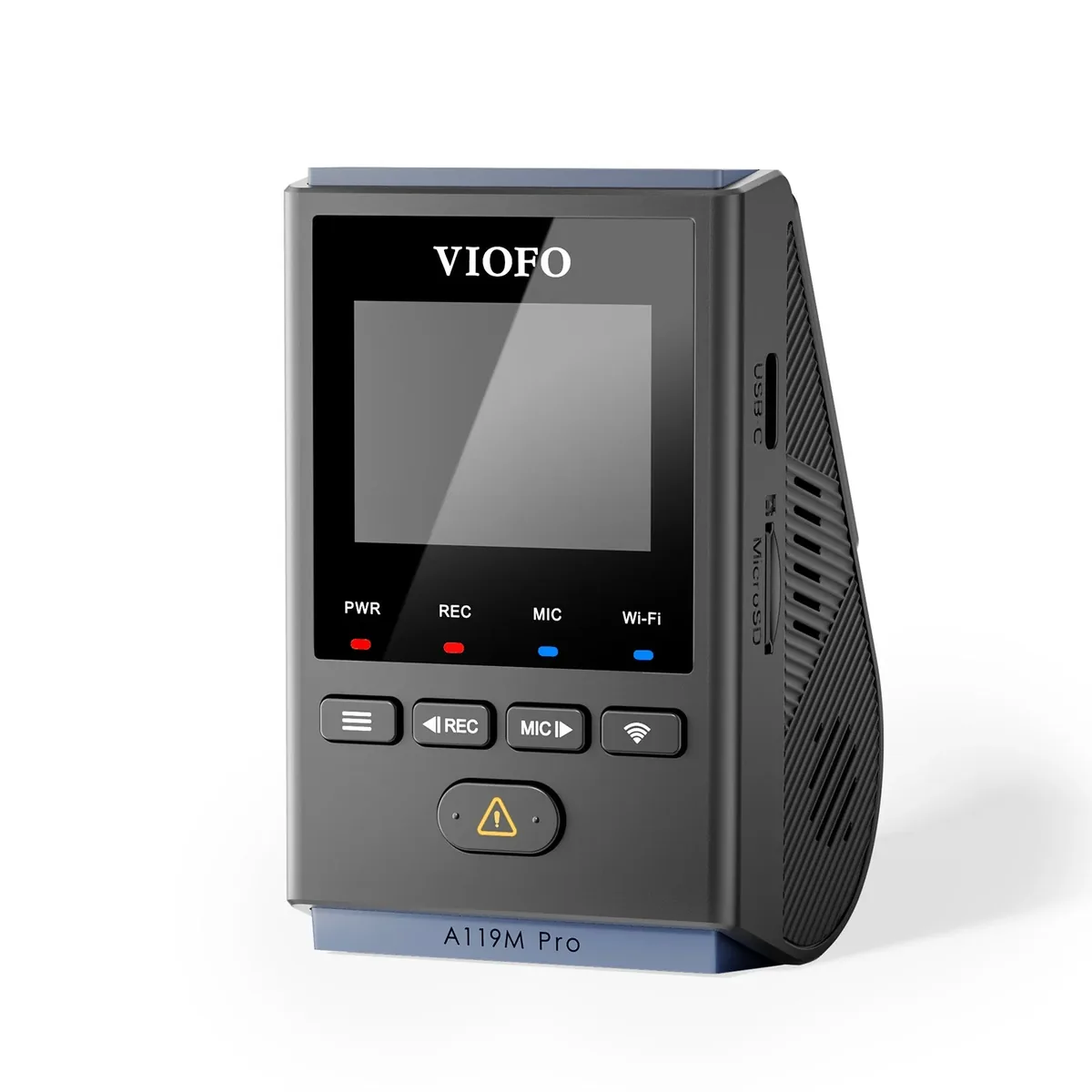
Viofo A119M Pro
- Front px/°
- 27.4
- Front
- 2160p/30
- 140° lens
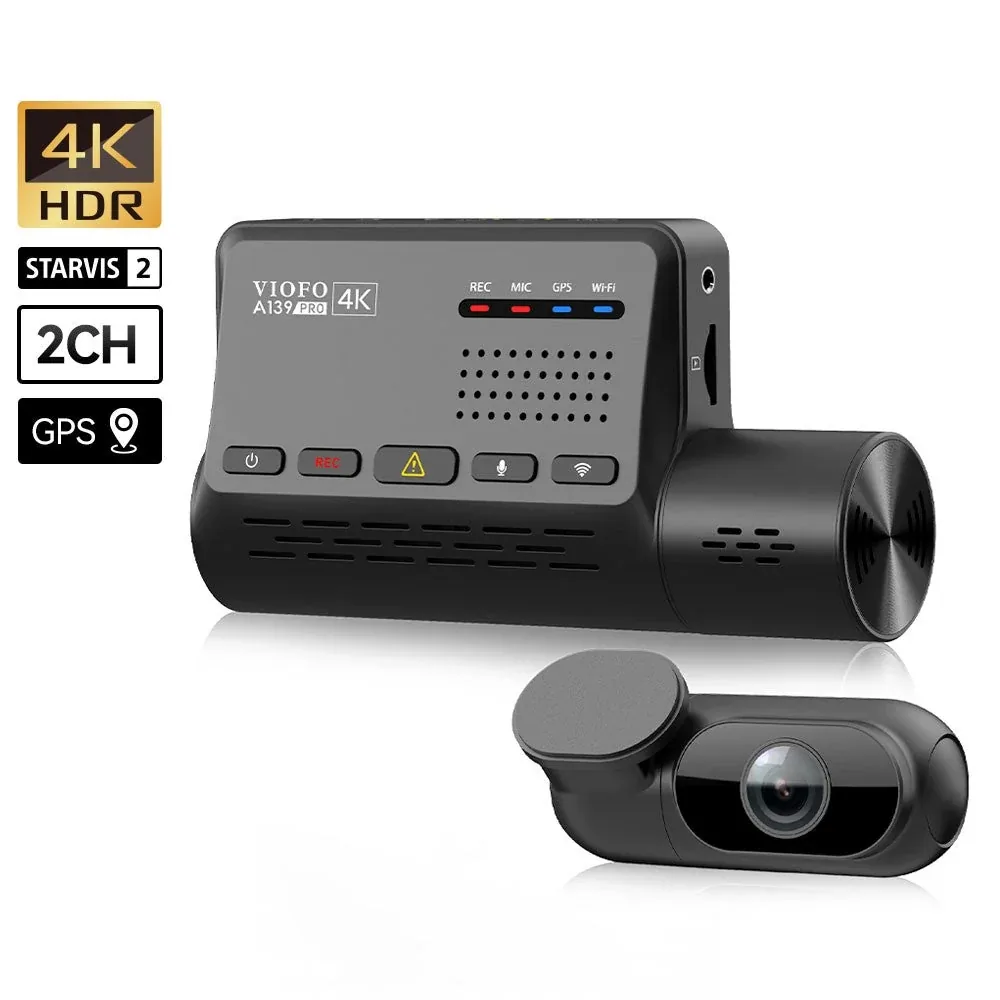
Viofo A139 Pro 2CH
- Front px/°
- 27.4
- Front
- 2160p/30
- 140° lens
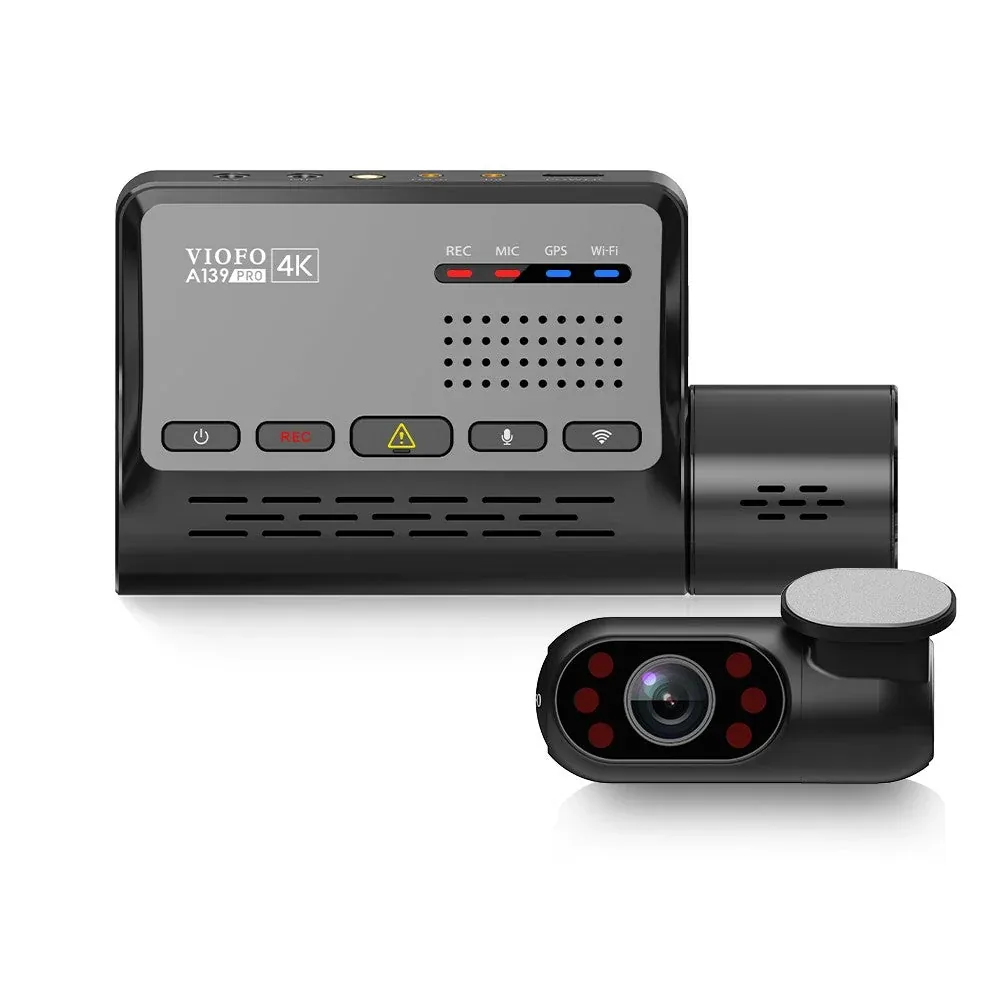
Viofo A139 Pro 2CH IR
- Front px/°
- 27.4
- Front
- 2160p/30
- 140° lens
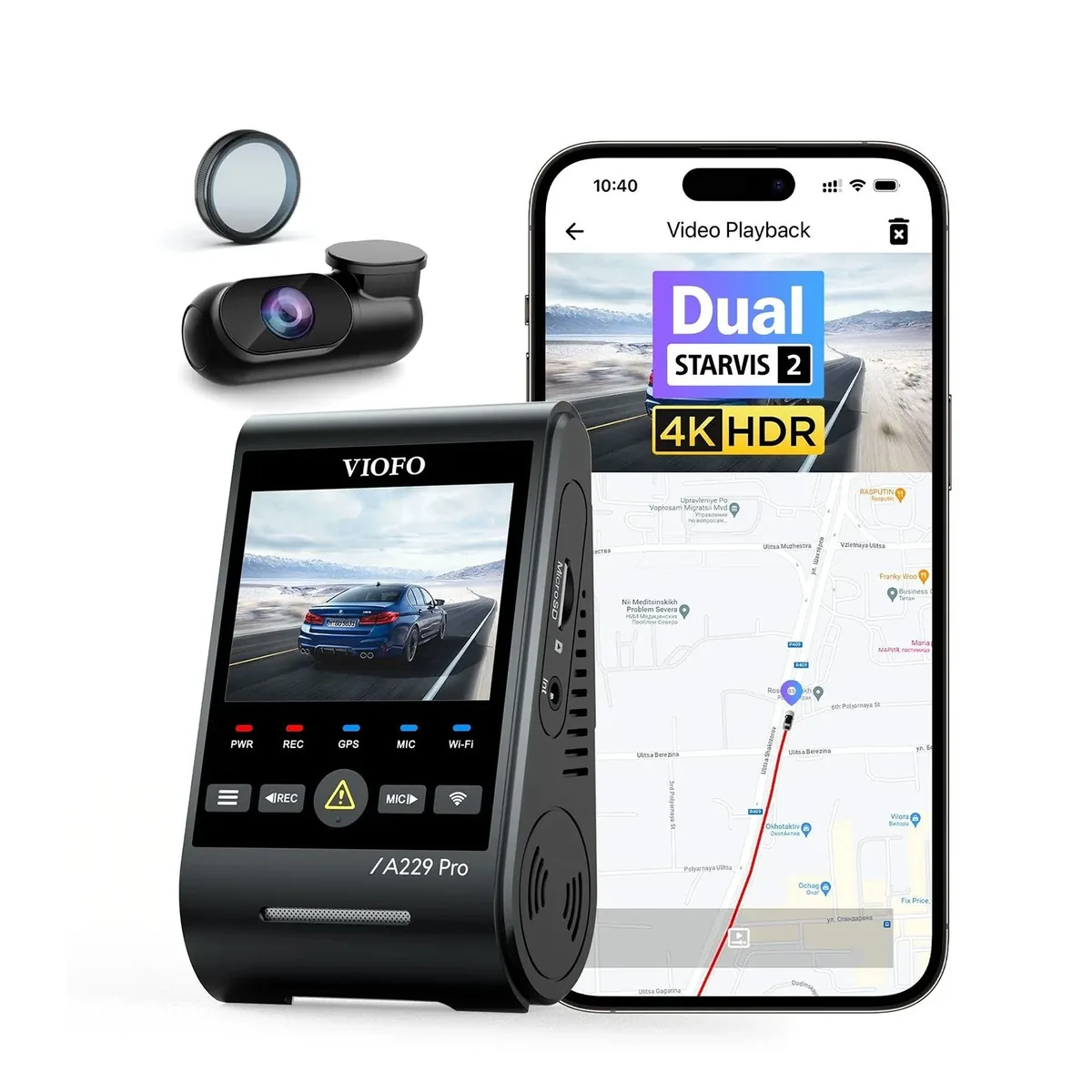
Viofo A229 Pro 2CH
- Front px/°
- 27.4
- Front
- 2160p/30
- 140° lens
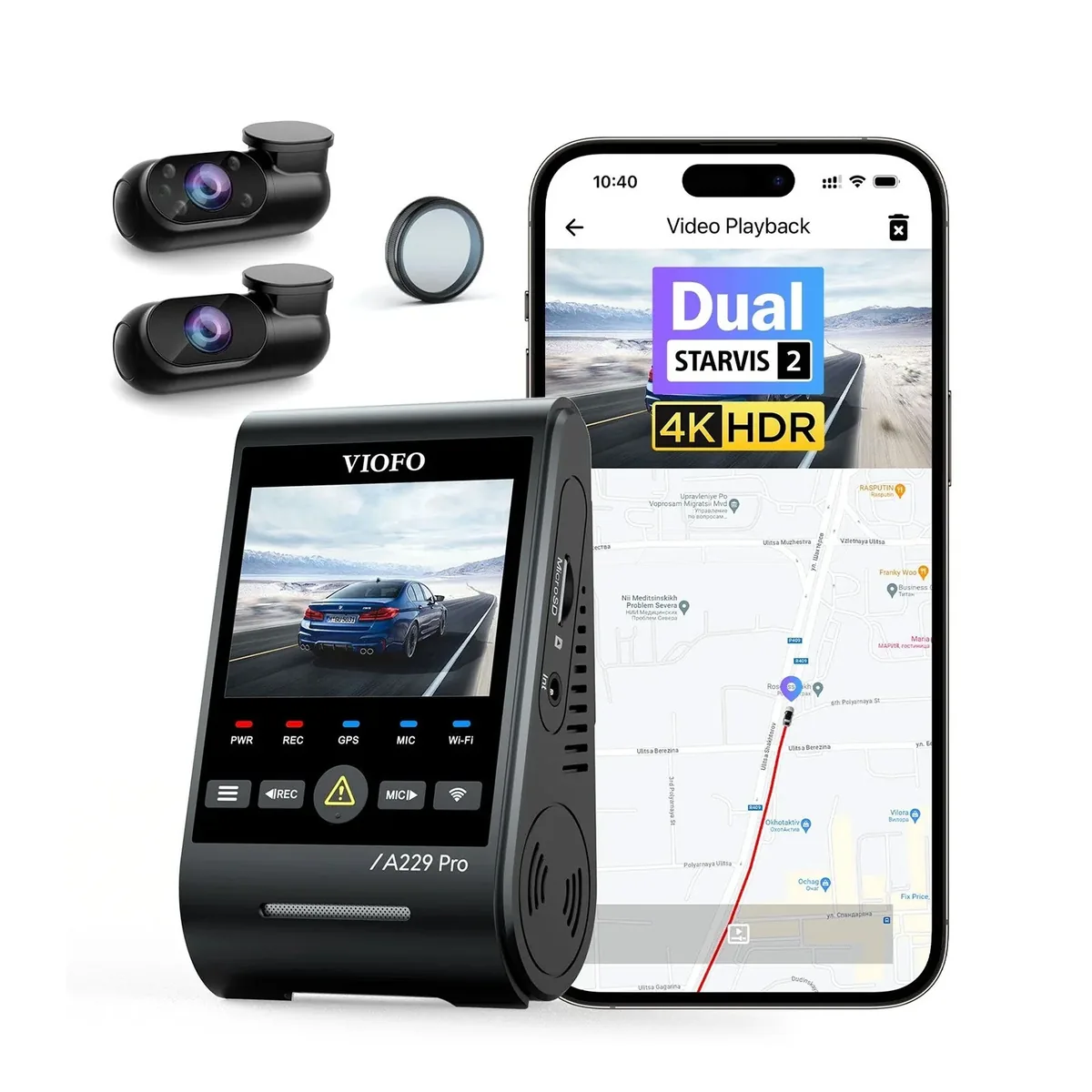
Viofo A229 Pro 3CH
- Front px/°
- 27.4
- Front
- 2160p/30
- 140° lens
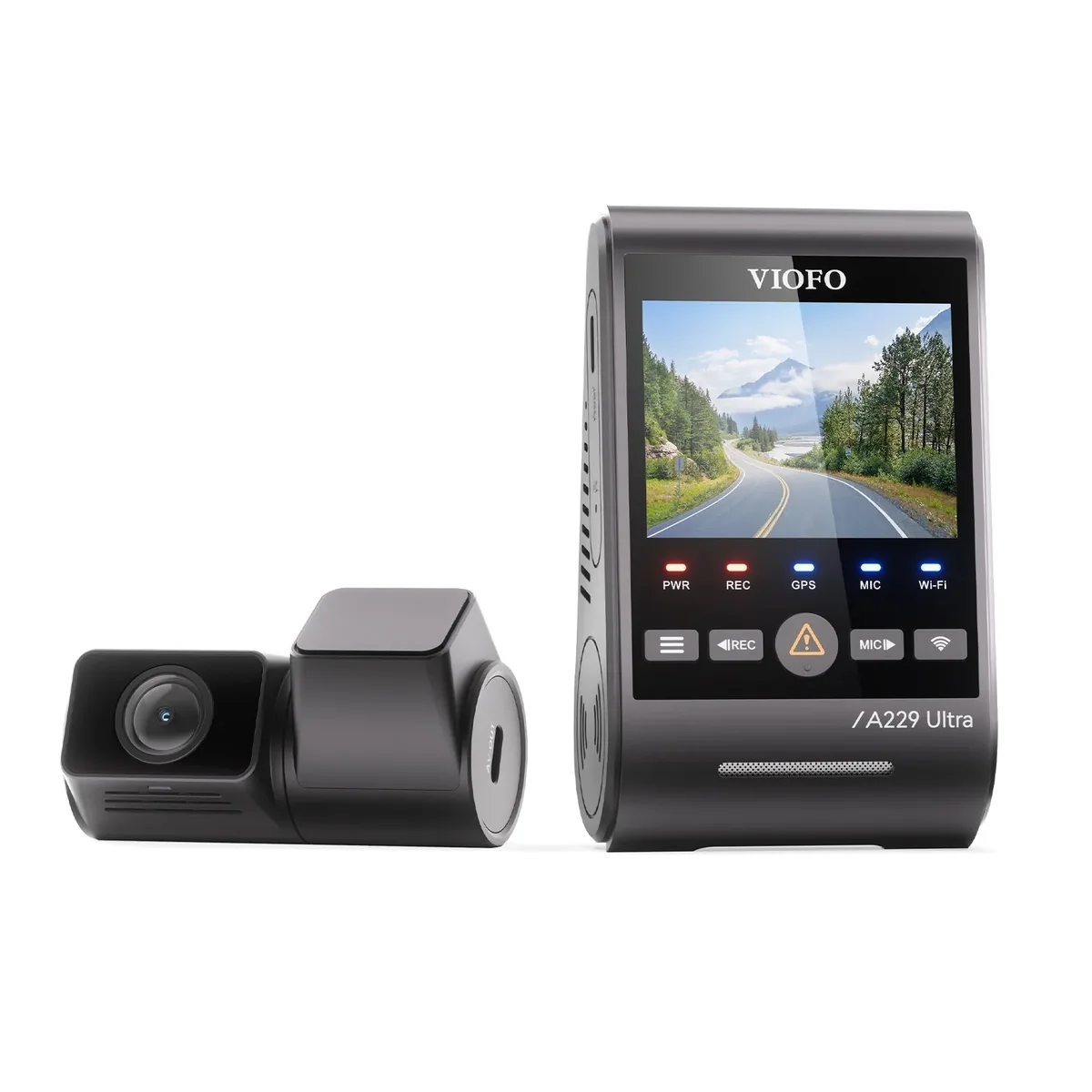
Viofo A229 Ultra 2CH
- Front px/°
- 27.4
- Front
- 2160p/30
- 140° lens
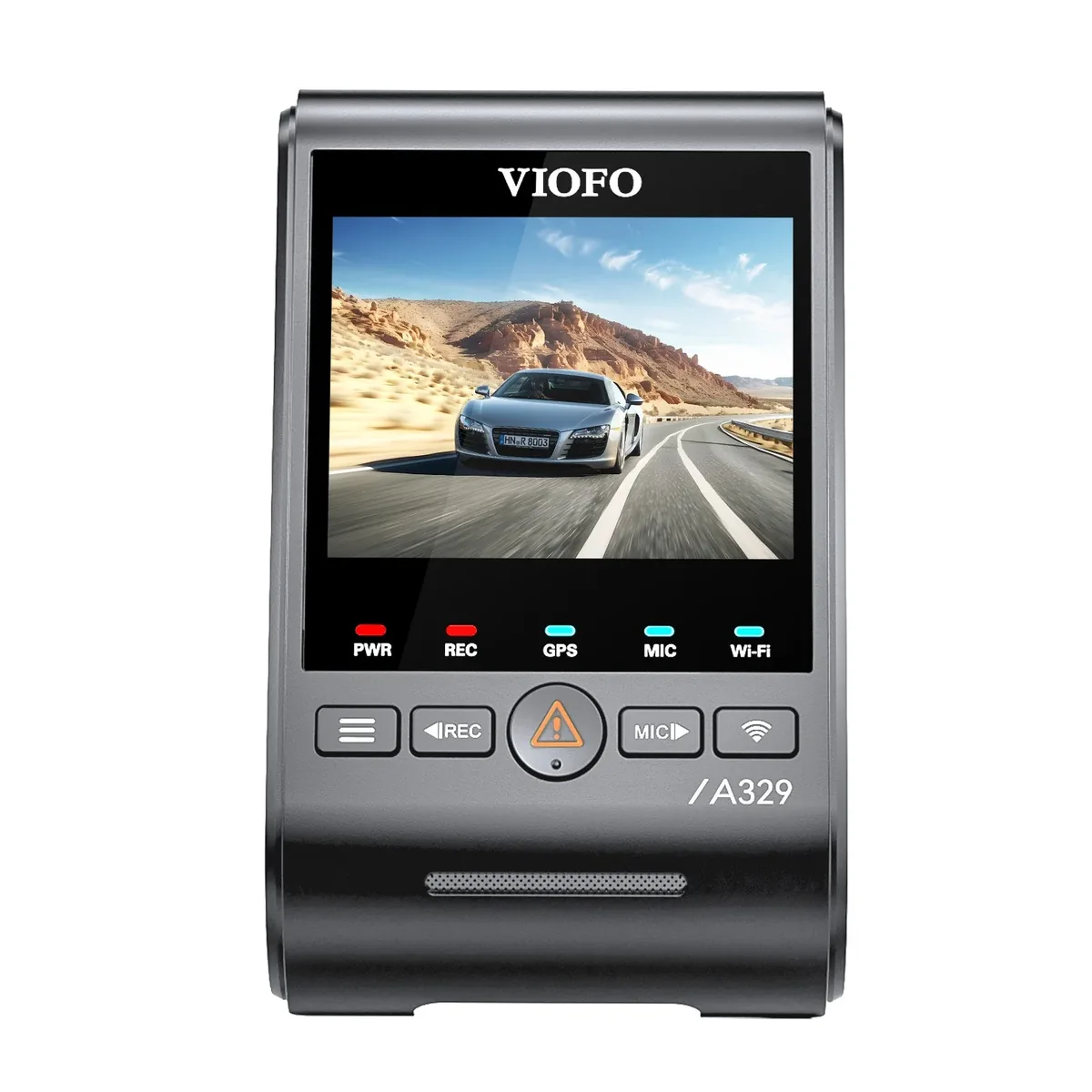
Viofo A329 1CH
- Front px/°
- 27.4
- Front
- 2160p/60
- 140° lens
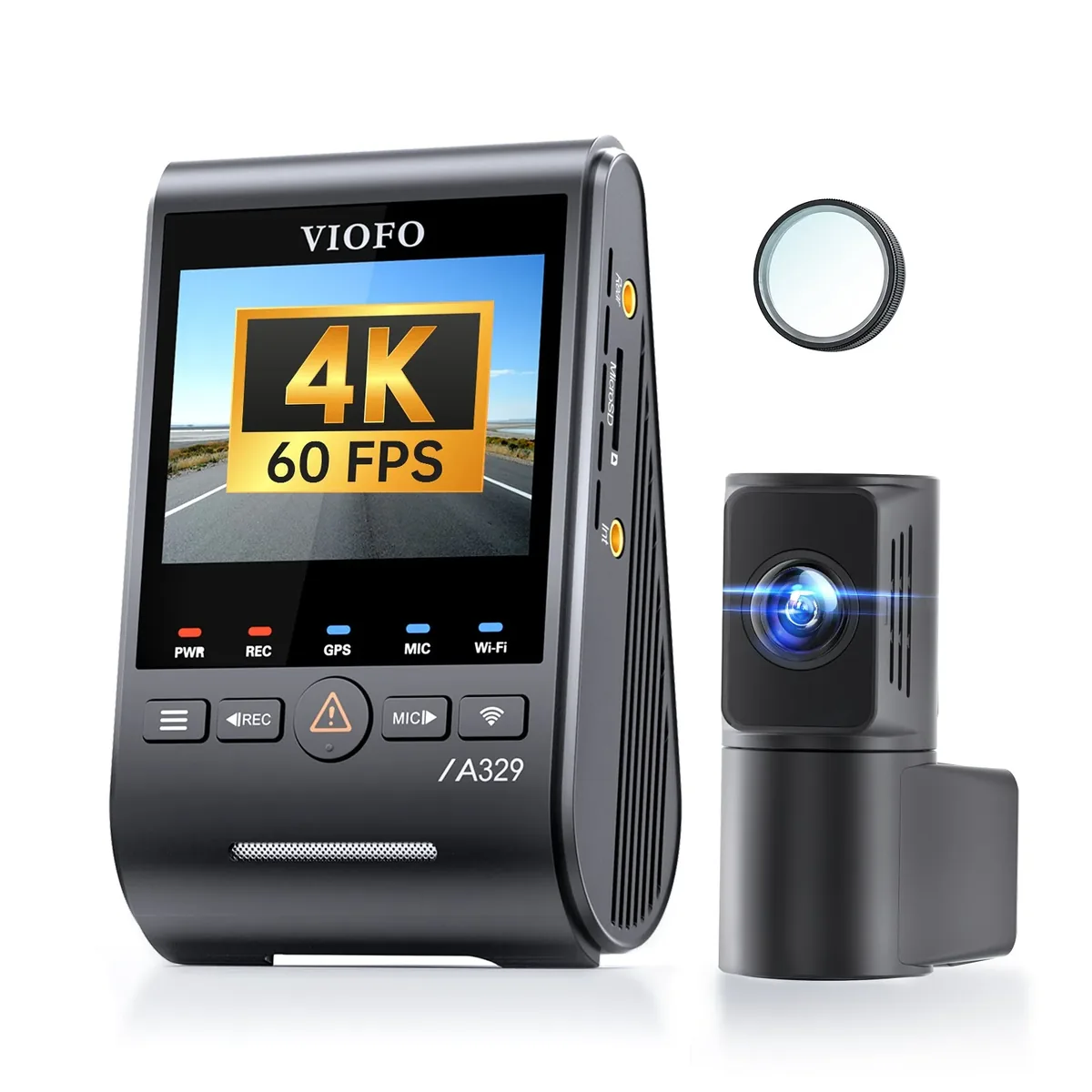
Viofo A329S 2CH
- Front px/°
- 27.4
- Front
- 2160p/60
- 140° lens
Garmin Dash Cam X310
- Front px/°
- 27.4
- Front
- 2160p/30
- 140° lens
Nextbase 622GW
- Front px/°
- 27.4
- Front
- 2160p/30
- 140° lens
Miofive S1
- Front px/°
- 27.4
- Front
- 2160p/30
- 140° lens
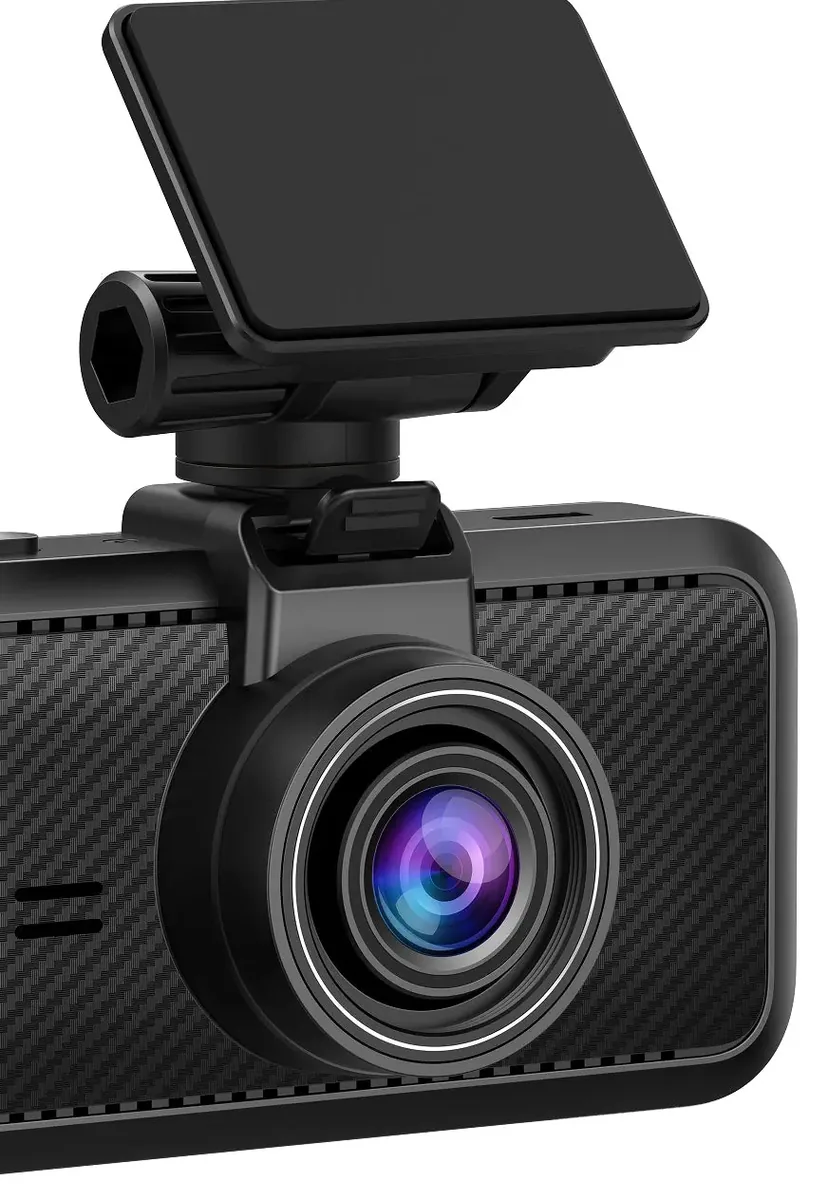
Miofive S1 Ultra
- Front px/°
- 27.4
- Front
- 2160p/30
- 140° lens
70mai A810 Lite
- Front px/°
- 27.4
- Front
- 2160p/30
- 140° lens
Nexar One
- Front px/°
- 27.4
- Front
- 2160p/30
- 140° lens
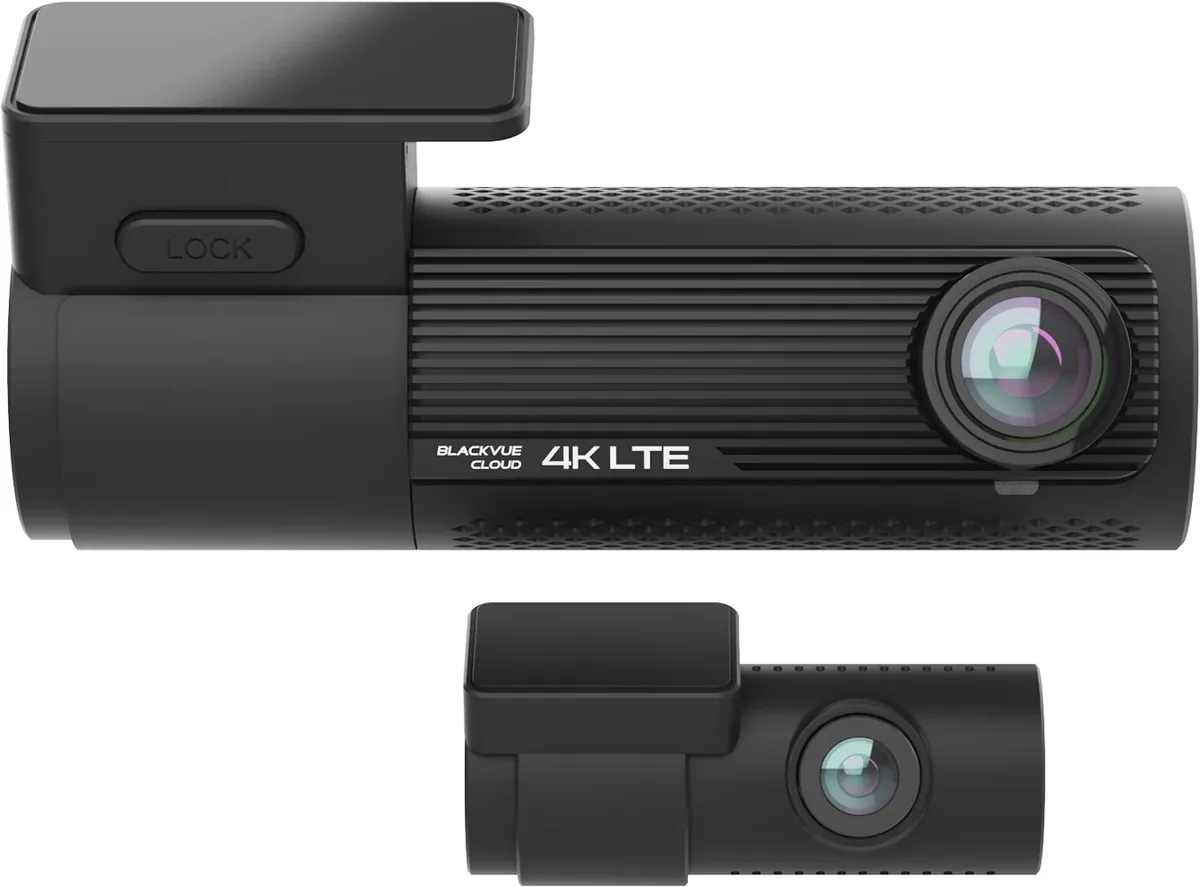
BlackVue DR970X-2CH Plus
- Front px/°
- 26.3
- Front
- 2160p/30
- 146° lens
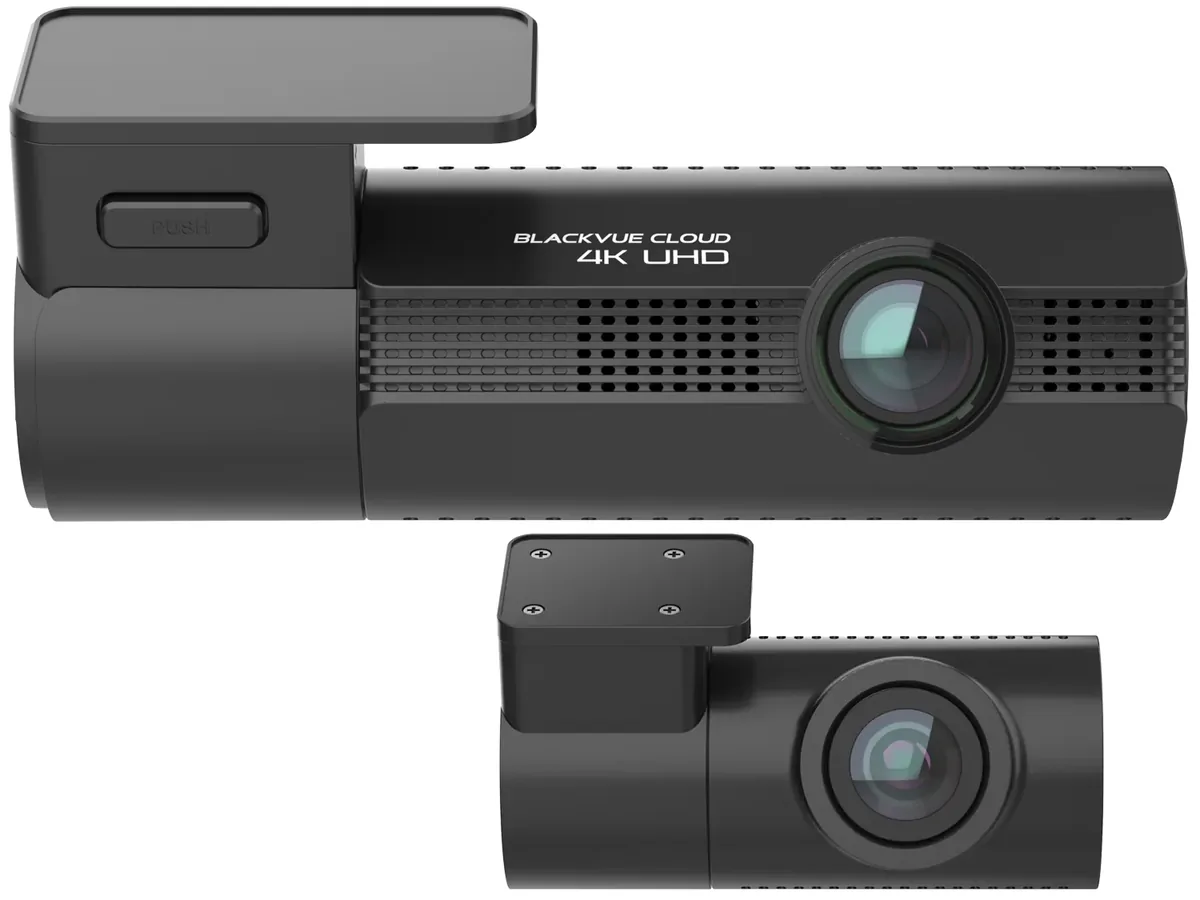
BlackVue Elite 9 2CH
- Front px/°
- 26.3
- Front
- 2160p/30
- 146° lens
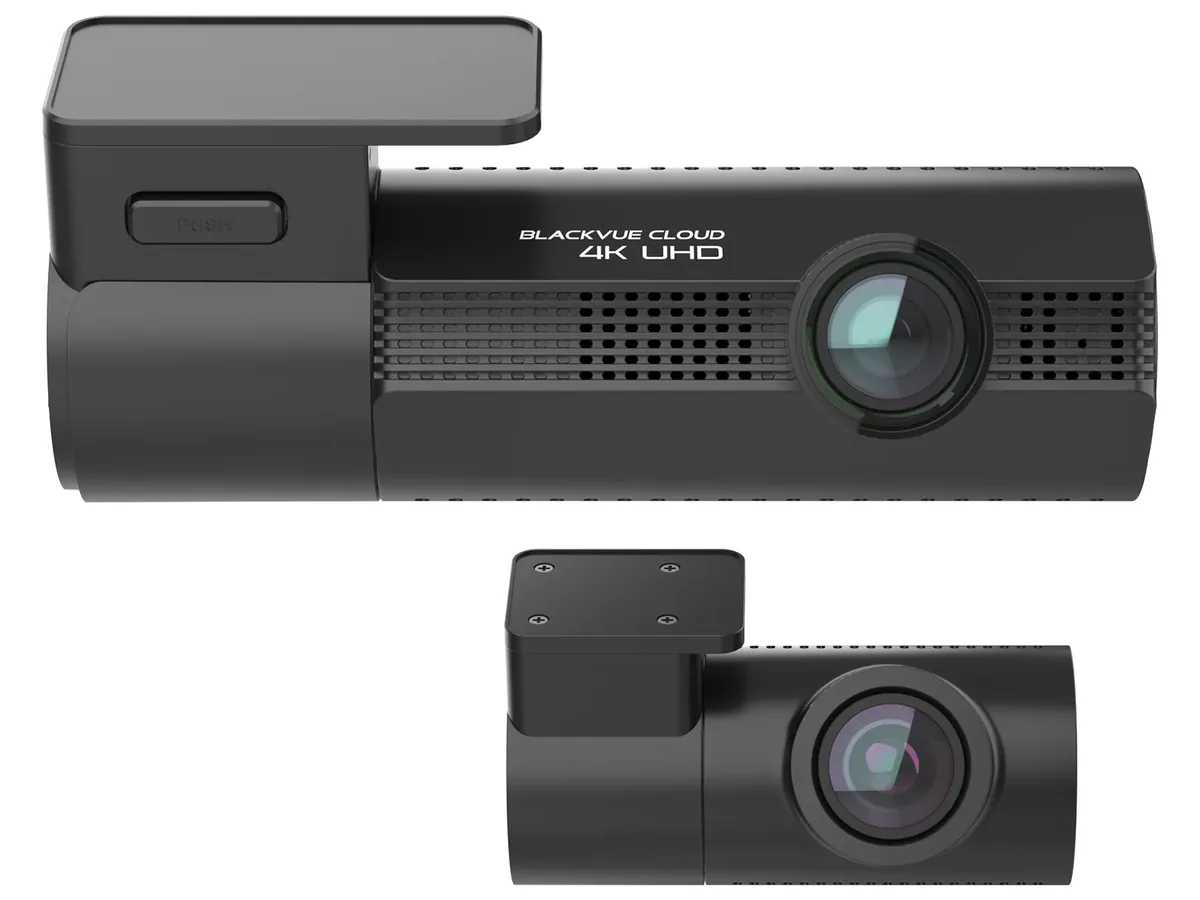
BlackVue Elite 10 2CH
- Front px/°
- 26.3
- Front
- 2160p/30
- 146° lens
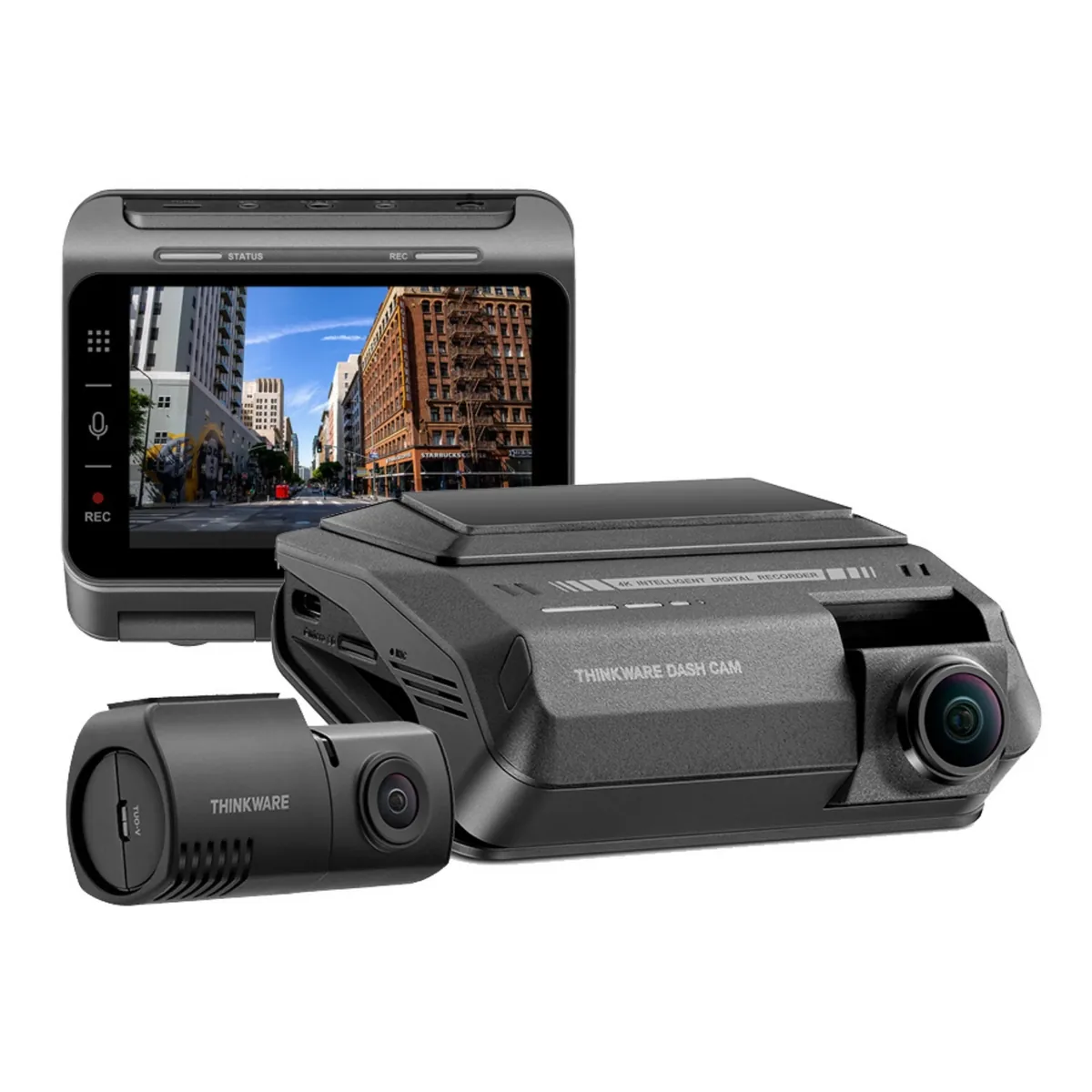
Thinkware ARC900
- Front px/°
- 26.1
- Front
- 2160p/30
- 147° lens
Thinkware U1000
- Front px/°
- 25.6
- Front
- 2160p/30
- 150° lens
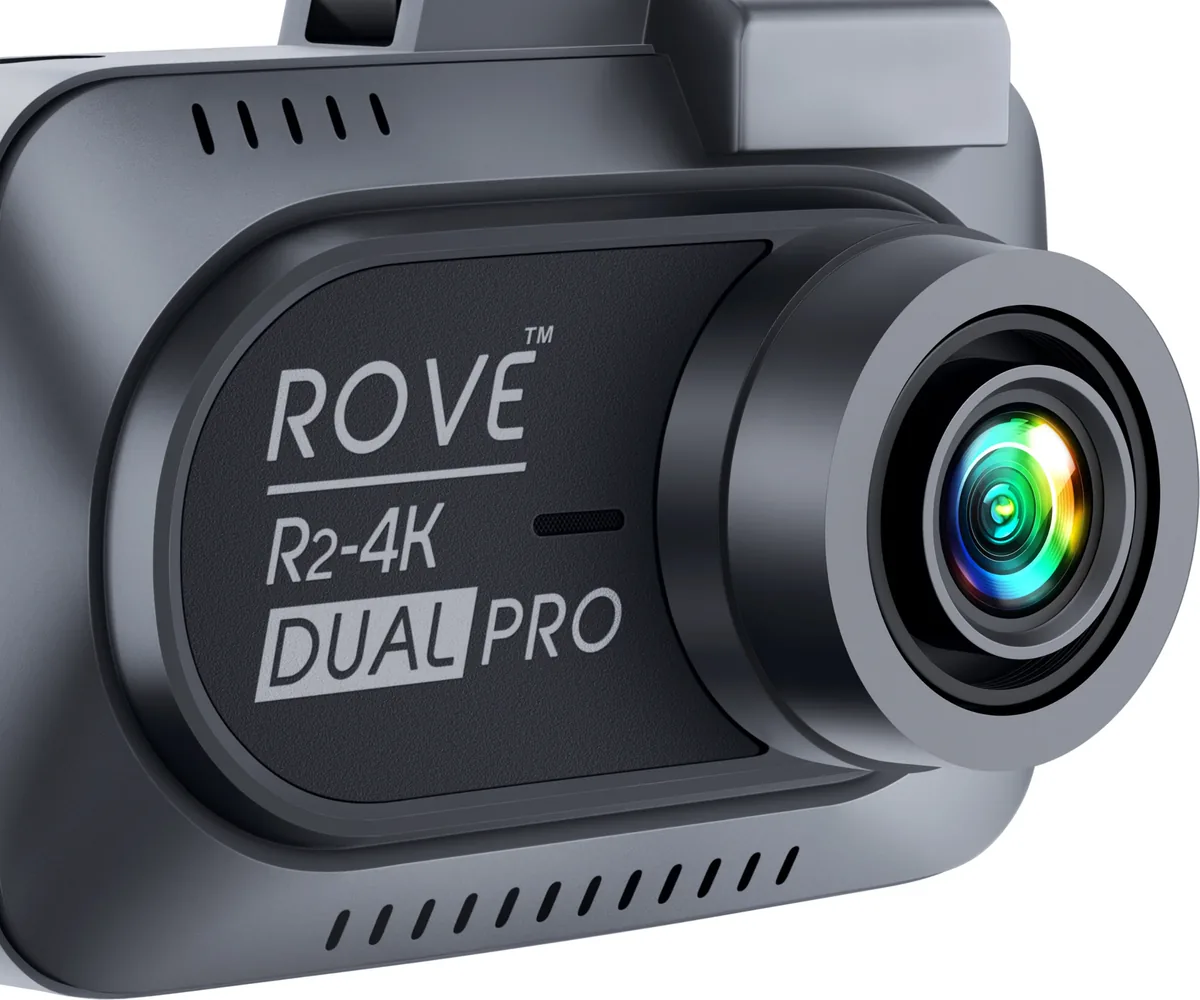
Rove R2-4K Dual Pro
- Front px/°
- 25.6
- Front
- 2160p/30
- 150° lens
Vantrue Nexus 4 Pro
- Front px/°
- 24.8
- Front
- 2160p/30
- 155° lens
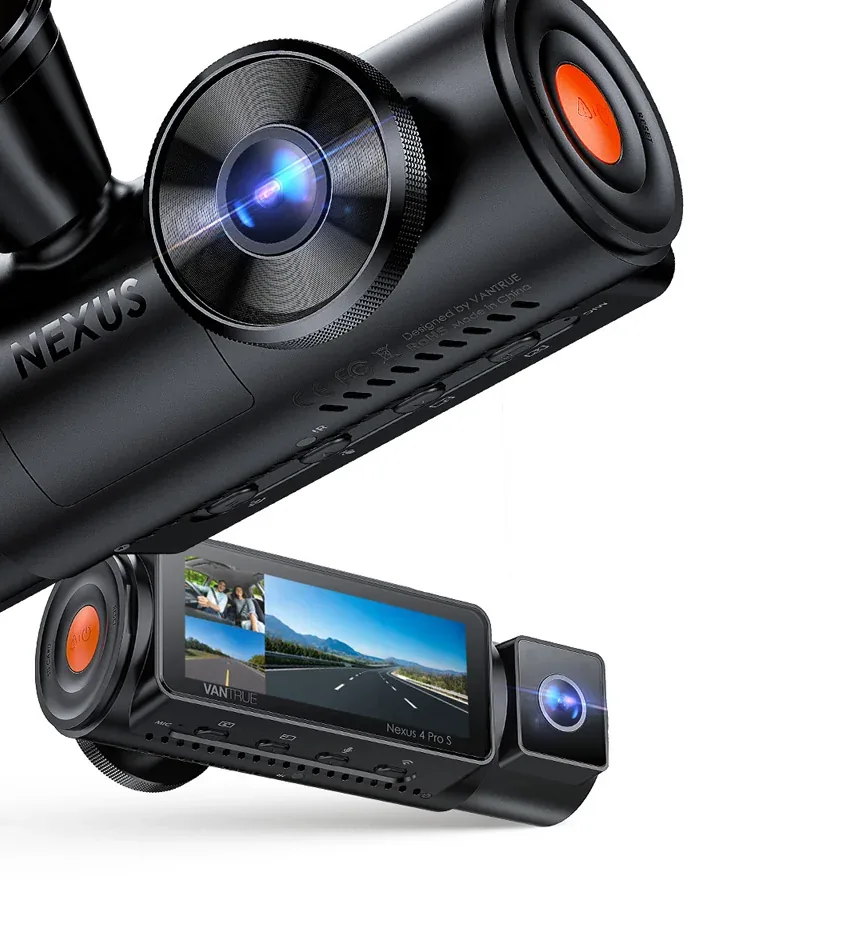
Vantrue Nexus 4 Pro S
- Front px/°
- 24.8
- Front
- 2160p/30
- 155° lens
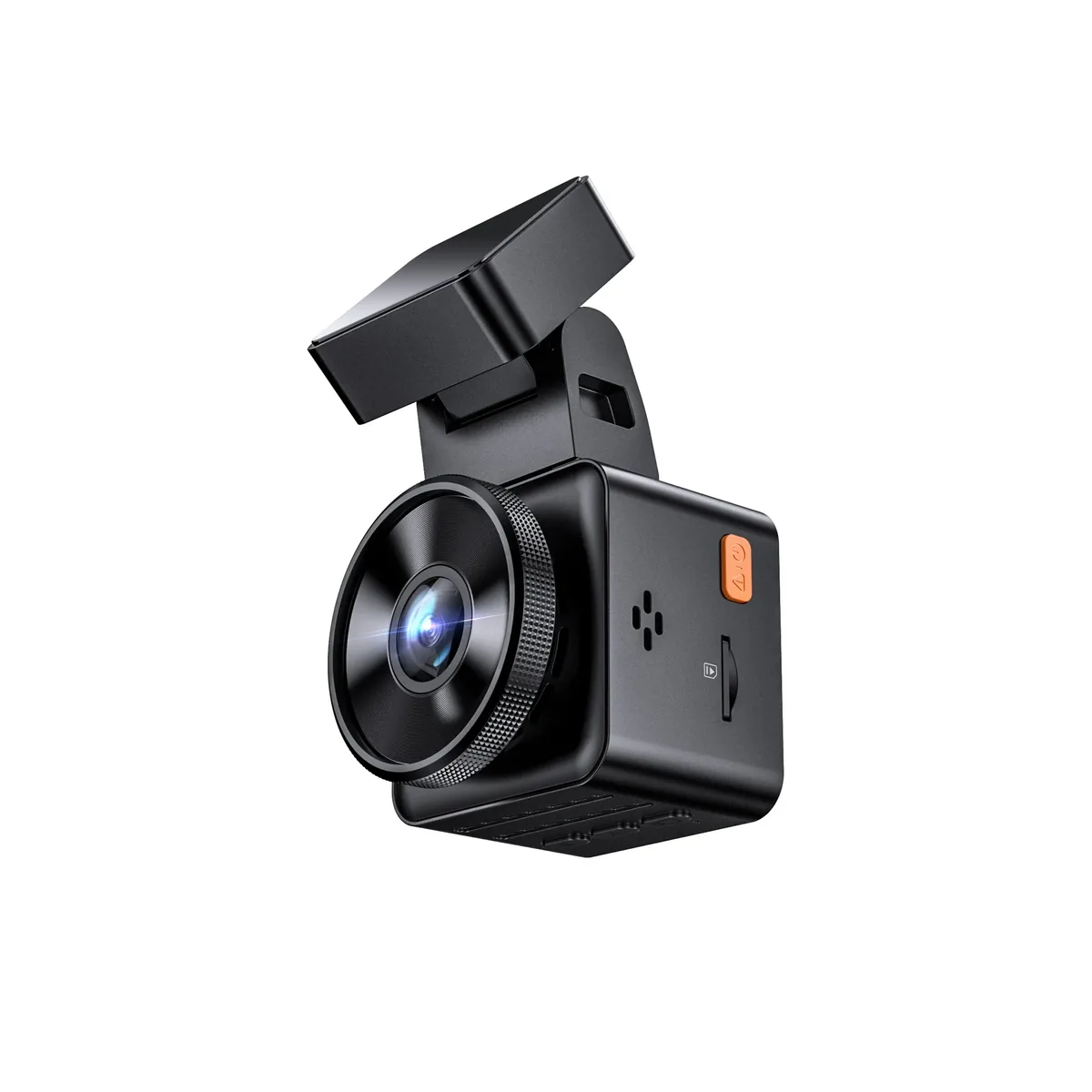
Vantrue Element 1 Pro
- Front px/°
- 24.3
- Front
- 2160p/30
- 158° lens
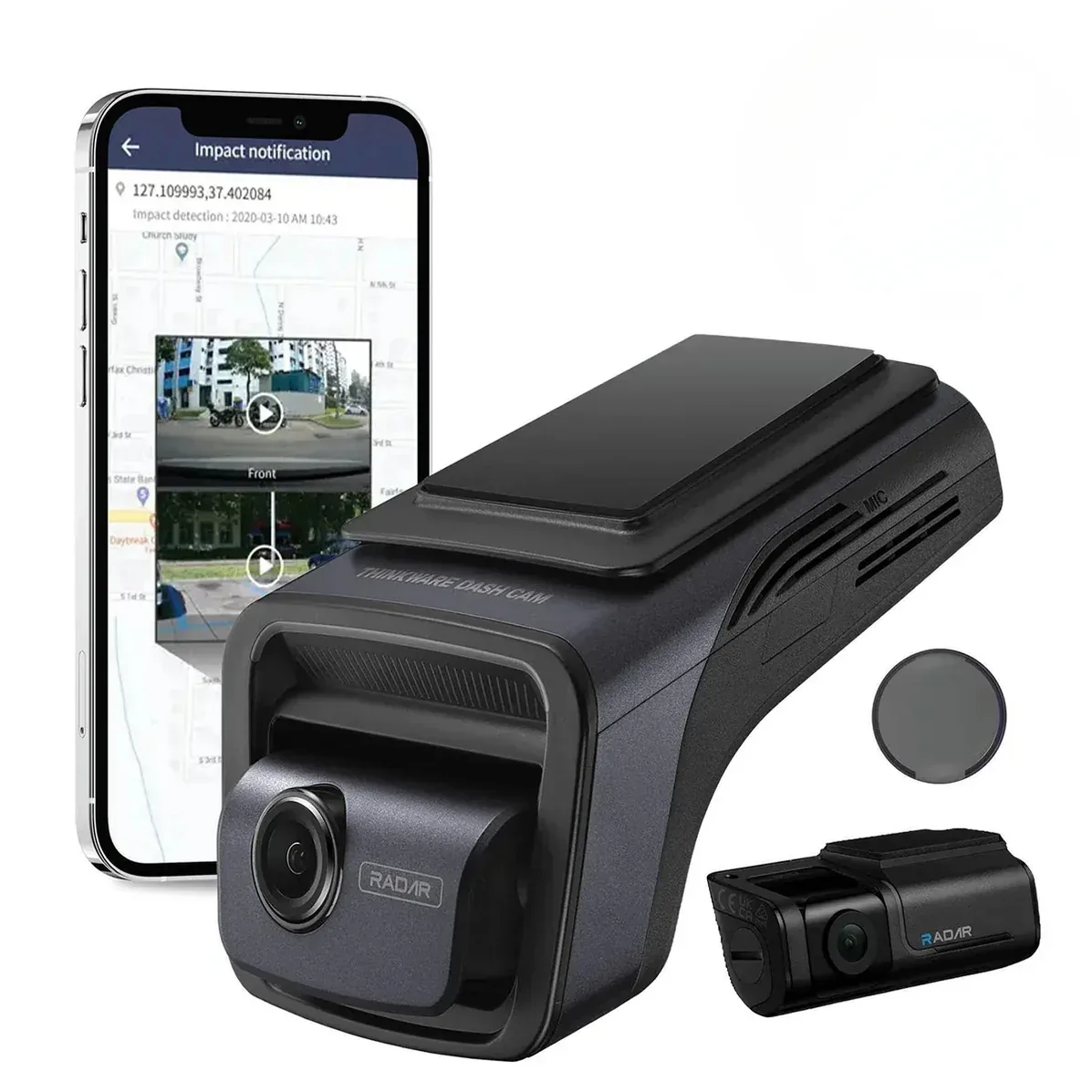
Thinkware U3000 2CH
- Front px/°
- 24.3
- Front
- 2160p/30
- 158° lens
By type
How many cameras there are, and where they point, decides most of the rest.
Shortlists
Each one is a filter over the same catalog, and each says which specification it is ordered by. None of them are ranked by opinion.
By brand
What people ask before the first one arrives
The questions that recur most in owner discussion, answered plainly.
Is a 4K dash cam better than a 1440p one?
Not automatically, and this is the single most expensive misunderstanding in the category. What decides whether a licence plate stays legible is how many pixels land on each degree of the scene, and that is resolution divided by field of view. A 4K camera behind a 170-degree lens spreads 3,840 pixels over a very wide view and resolves about 23 pixels per degree; a 1440p camera behind a 125-degree lens resolves about 20, and a 4K camera behind a 140-degree lens resolves about 27. Sensor size, aperture and bitrate then decide how good those pixels are after dark. Sort this catalog by pixels per degree and the ranking looks nothing like sorting by resolution. How the figure is calculated →
Will a dash cam survive a hot car?
It depends entirely on what is inside it. A lithium battery in a device stuck to a windshield is the classic dash cam failure — the cell swells, the case distorts, and the camera stops. A supercapacitor cannot swell: it stores only enough energy to close the current file when power is cut, and it tolerates a far wider temperature range. Every camera here is flagged by power cell with its published operating range beside it, because a supercapacitor camera whose maker will not state a ceiling is not obviously safer than a battery camera that does. Cameras built for heat →
What does parking mode actually record?
Four different things, all sold under one name. The weakest starts recording when the impact sensor fires, by which point the car that hit you is already leaving. Time-lapse records continuously at one to three frames a second, which catches the approach at a stuttery frame rate. A buffered mode keeps a rolling few seconds in memory so the moments before the impact are saved too. A radar mode wakes the camera when something moves nearby, before contact, which is the only version that catches the approach without leaving the camera running all night. Every camera here carries a parking tier derived from what it supports. Cameras that record the approach →
Do I need to hardwire a dash cam?
Only for parking mode. Plugged into a 12V socket a dash cam powers up with the ignition and records the whole drive, which is all a lot of people want. Parking coverage needs constant power, which means either a hardwire kit tapped into a fuse box, an OBD-II power cable, or a dedicated battery pack. Almost every manufacturer sells the kit separately, so budget thirty to fifty dollars on top of the camera — and set the kit's low-voltage cutoff conservatively, because the alternative is a camera that watches your car right up until the car will not start. Hardwiring, plainly →
Why does my dash cam keep saying the memory card has failed?
Because an ordinary memory card is not built for what a dash cam does to it. Loop recording rewrites the same cells continuously, all day, every day, and a standard card rated for occasional photo storage wears out in months. High-endurance cards use different flash designed for exactly this duty cycle. Card faults are far and away the most common dash cam problem people report, and the symptoms look like camera faults: recordings that stop after a few seconds, double beeping, files that will not play back, and cameras demanding a format on a card that worked yesterday. Why endurance cards matter →
Is a wider lens better?
Wider is better for context and worse for detail, and the trade is real rather than marginal. A 170-degree lens catches a car entering from a side street that a 140-degree lens clips entirely, which matters at intersections and in parking lots. It also spreads the same pixels over 30 more degrees of scene, so everything in the frame is sampled more coarsely. The narrowest front lens in this catalog is 125 degrees and the widest is 170, and the difference in pixels per degree between two otherwise identical cameras at those extremes is about a third. Field of view, and how it is measured →
Do I need a rear camera?
If your realistic worry is being hit from behind by someone who does not stop, yes, and the specification to check is not whether there is a rear camera but what lens is on it. Most rear channels are 1080p behind a 160-degree lens, which is about 13 pixels per degree — enough to show that something hit you, not enough to say what. The exceptions in this catalog run to 34 pixels per degree, which is a completely different capability. A rear camera also has to shoot through glass that may be tinted or laced with defroster lines, which is why some makers now offer weatherproof modules that mount outside. Rear cameras that read a plate →
Can a dash cam record inside the car at night?
Only with infrared. A cabin with the dome light off is effectively black to an ordinary sensor, no matter how good it is, because there is nothing to expose. Infrared LEDs illuminate the interior at a wavelength people cannot see and turn it into usable monochrome without blinding the person sitting in it. That is why every camera aimed at rideshare and delivery drivers has them, and why a cabin channel without them is close to decorative after dark. Cameras with an infrared cabin channel →
Is it legal to mount a dash cam on the windshield?
It varies by state and the rules are about obstruction rather than about cameras. Several states restrict what can be attached to a windshield at all; several more allow it only within a defined area, typically a small square in one of the lower corners or a band behind the rearview mirror. Mounting high and central, tucked behind the mirror, keeps you inside almost every version of the rule and is also the best place optically. Audio recording inside the cabin is a separate question with its own consent rules, and it is the one that actually catches people out. Where the law draws the line →
Why do dash cams need a CPL filter?
Because your dashboard is reflected in your windshield, and on a bright day that reflection sits in the same frame as the road. A circular polarising filter cuts light at a particular angle and removes most of it. It is the single cheapest improvement to daytime footage and almost nobody fits one, partly because most manufacturers sell it as a thirty-dollar accessory rather than including it. Three cameras in this catalog include a CPL in the box and one builds the polariser into the lens assembly, which is the version you never have to remember to rotate. What a polariser does →
Data last updated 2026-09-23